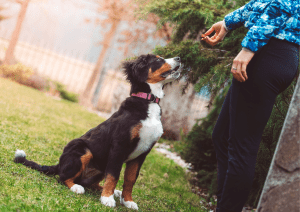
Positive reinforcement is a training technique that rewards desired behaviors with treats, praise, or affection. By using positive reinforcement, you can effectively teach your dog new commands and behaviors. It not only makes training enjoyable for your dog but also strengthens the bond between you and your furry friend.
Understanding Positive Reinforcement
Positive reinforcement operates on a simple principle: rewarding desirable behavior increases the likelihood of that behavior recurring. This mechanism is deeply rooted in the psychology of learning and motivation, not only for dogs but also for humans.
When you reward your dog for performing a specific action or exhibiting good behavior, you’re essentially sending a clear and positive message. You’re letting your dog know that what they did was right and is worthy of acknowledgment and praise. This creates a sense of achievement and satisfaction for your dog, similar to how humans feel when they receive compliments or rewards for their efforts.
Basic Obedience Training
Now that you grasp the concept of positive reinforcement, let’s get down to the nitty-gritty of basic obedience training. These foundational commands—sit, stay, and come—are crucial for a well-behaved dog.
Sit
Start with a treat in your hand. Hold it above your dog’s head and slowly move it backward, guiding your dog into a sitting position. Once seated, say “sit” and reward with the treat and praise.
The “sit” command is crucial in dog training as it provides immediate control, forms the foundation for other commands, and promotes polite interactions with people and other dogs.
Stay
Ask your dog to sit, then hold your hand, palm-out, in front of their face and say “Stay.” Take a step back, then return. Reward and praise if your dog stays in position. Gradually increase the distance over time.
The “stay” command is vital in dog training because it ensures your dog stays in place until you release them. This obedience is essential for maintaining calm and control in various situations, such as when answering the door or crossing a street. As your dog becomes more confident, you can gradually increase the distance for a more reliable command.
Come
Using a long leash, crouch down and call your dog’s name followed by “come.” Gently tug on the leash if needed. When your dog reaches you, reward it with treats and affection.
The “come” command holds significant importance in dog training because it ensures your dog’s safety by allowing them to return to you swiftly when necessary. It’s indispensable in off-leash situations and when you need to maintain control over your dog’s movements. Always remember to make coming to you a positive and rewarding experience for your dog to reinforce this crucial obedience.
By patiently and consistently practicing these basic commands, you’ll establish a strong foundation for your dog’s behavior. These commands are not only about control; they also build trust and mutual respect between you and your furry friend. So, get started today, and watch your dog become a well-behaved companion who responds to your every command.
Leash Manners and Walking Your Dog
One of the most common challenges dog owners face is leash manners. Walking your dog should be an enjoyable experience for both of you. Here’s how positive reinforcement can help:
- Loose Leash Walking: When your dog walks without pulling, reward them with treats and praise. If they start to pull, stop walking until the leash is loose again.
- Direction Changes: If your dog pulls, change direction. Reward them when they follow you willingly. This teaches them to pay attention to their movements.
By using positive reinforcement during walks, you’ll find that your dog becomes a well-behaved walking companion.
Building Trust and Bonding
Positive reinforcement isn’t just about training; it’s also about building a strong bond based on trust and respect. When you reward your dog for good behavior, you’re sending a clear message of love and approval.
As you train your dog using these techniques, you’ll notice a remarkable transformation in your relationship. Your dog will start looking to you for guidance and approval, and you’ll become a more confident and effective trainer.
Problem-solving with Positive Reinforcement
Every dog is unique, and they may exhibit specific behavioral challenges. Fortunately, positive reinforcement can address many of these issues effectively.
- Barking: Use treats and praise to reward moments of silence. Gradually extend the time between rewards as your dog learns to remain quiet.
- Jumping: When your dog greets you without jumping, reward them immediately. Consistency is vital in teaching them that jumping is not acceptable.
- Chewing: Provide appropriate chew toys and reward your dog when they use them. Redirect them from inappropriate items, and praise them for making the right choice.
Advanced Training Techniques
Once you’ve mastered the basics, you can explore more advanced commands and tricks with your dog. These include agility training, complex tricks, and specialized skills. Positive reinforcement can be applied to these advanced training scenarios as well.
Agility Training
In agility training, your dog learns to navigate obstacle courses with enthusiasm. You can encourage them by rewarding leaps over hurdles, precise weaving, and confidently tackling tire jumps with treats and praise. Celebrating each accomplishment in this way ensures that agility training becomes a joyful and rewarding experience for your dog, fostering their enthusiasm and motivation.
Complex Tricks
Complex tricks are an exciting way to engage your dog’s cognitive abilities. By challenging them with tricks like handstands and roll overs, you stimulate their mental agility. Break down these actions into smaller, manageable steps, and consistently reward their progress. It’s worth noting that backflips are suitable for some dogs when trained safely with positive reinforcement. Overall, these complex tricks not only entertain but also boost your dog’s confidence and mental acumen.
Specialized Skills
Specialized training equips your dog for unique roles and strengthens your bond. Positive reinforcement is key in training for tasks like search and rescue, emphasizing their importance and rewarding success. Therapy dog work focuses on gentle interactions, reinforcing positive behavior. Teaching assistance tasks for household chores through rewards and praise not only enhances your dog’s skills but also deepens your connection. This specialized training empowers your dog to be a valuable and capable companion.
Choosing the Right Rewards
Dogs, like humans, have unique preferences when it comes to rewards. While some may eagerly work for treats, others find praise and affection more motivating. Recognizing your dog’s preferences is crucial for selecting the most effective rewards to reinforce their good behavior.
Understanding your dog’s reward preferences allows you to tailor your training approach, ensuring that you’re using the most appealing incentives. This personalized approach not only enhances the effectiveness of positive reinforcement but also deepens the connection between you and your furry companion. So, take the time to discover what truly motivates your dog and use it to reinforce their positive behavior effectively.
Maintaining Consistency
The success of positive reinforcement training hinges on consistency. Stick to a regular training schedule, use the same commands and rewards, and ensure that all family members follow the same approach. This consistency will reinforce the desired behaviors in your dog.
FAQ: Can positive reinforcement training be used for all dog breeds, regardless of their age or size?
Yes, positive reinforcement training can be used effectively for all dog breeds, regardless of their age or size. This training approach is adaptable and suitable for puppies, adult dogs, and even senior dogs. It can be customized to accommodate the unique needs and abilities of different breeds, making it a versatile and humane method for fostering good behavior in dogs of all shapes and sizes.
The positive reinforcement training approach not only helps in teaching obedience but also fosters a strong and loving bond between you and your furry friend. With patience, consistency, and the right rewards, you can transform your dog into a well-behaved companion.